
Preschool Schedule and Rules
Let’s get ya where you need to go. (keep scrolling)

Class Schedule
Sticking to the class schedule is crucial for several reasons!
Knowing what activities are planned for the day and when they will occur helps students feel more secure and comfortable. It reduces anxiety and uncertainty, allowing them to focus better on their tasks and engage more fully in learning.
For teachers, this schedule serves as a roadmap for organizing and managing classroom activities. It helps ensure that all planned material is covered within the allotted time, preventing important topics from being rushed or overlooked.
8:40 - Arrive and setup room
9:00 - Pray together in the room next to Preschool
9:10 - Be in your classroom ready to receive the students
9:30 - 9:45 - Meet + Greet / Color / Magnet Blocks
9:45 - 9:55 - Bathroom for those who need it. Take boys and girls separately.
9:55 - 10:00 - Rules (more information on how to teach the rules below)
10:00 - 10:20 - Snack Time / Craft / Lesson Sheets
10:20 - 10:30 - Have kids help cleanup, and then play a game until 10:30, especially if you’re ahead of schedule.
10:30 - 10:55 - Worship and Lesson (more info below)
10:55 - 11:00 - Practice Bible Verse
11:00 - til - Game / Dismissal
After dismissal - Tear Down Room
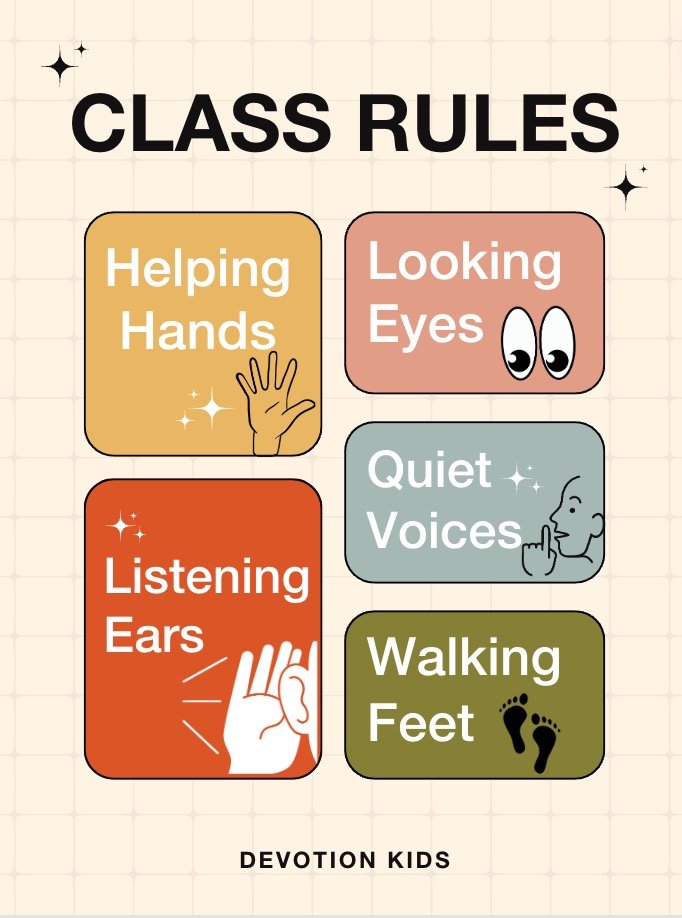
We cover our Class Rules every Sunday because kids need to feel safe, and safety comes from consistency.
Let me explain…
For students, understanding the rules from the outset helps set clear boundaries and guidelines for behavior. This clarity reduces confusion and uncertainty, allowing students to feel more secure and confident in their interactions within the classroom. By knowing what is expected of them, students can better focus on their learning and engage more fully in classroom activities.
For teachers, reviewing the rules at the beginning of class helps set the tone for the morning and reinforces expectations for behavior. It provides an opportunity to address any potential issues proactively and establish a respectful and cooperative classroom culture. Additionally, covering the rules at the beginning promotes consistency and accountability, helping to ensure a smooth and productive learning experience for both teachers and students.
Covering the rules teaches the students that the expectations are the same no matter who their teacher is.
These rules work only if they are taught and discussed every Sunday.
The Rules Defined.
It’s vital that the kids don’t just know the rules but that they also understand what it looks like to live out the rules. When teaching these rules, it would be helpful for you to define the rules with examples of what each rule looks like. Ask students to contribute with their own examples as well.
Helping Hands
Encourage students to assist each other with tasks such as cleaning up toys or helping a classmate who is struggling with an activity. This also means our hands are meant to help others, not hurt others. Teachers can also praise students when they use their hands to help others and reinforce the idea that kindness and cooperation are valued in the classroom.
Looking Eyes
Model active listening and eye contact during discussions and instructions. When covering the rules, you can have the students practice by asking them to focus their eyes on specific objects or people. You can also incorporate visual cues, such as holding up a quiet finger to remind students to look with their eyes. With this age, it would be helpful to get their bodies involved in some way when reminding them of this rule. For example, have them make fake glasses over their eyes with their fingers to show you that they’re looking with their eyes.
Listening Ears
Emphasize the importance of listening ears by playing listening games or reading stories aloud and asking comprehension questions afterward. When explaining this rule or bringing it up later during class, you can encourage students to practice active listening by repeating instructions back to the teacher or taking turns speaking during a group discussion. Teachers can also provide positive reinforcement when students demonstrate good listening skills, such as giving them stickers or praise.
Quiet Voices
Remind students to use soft voices when speaking to each other and model appropriate volume levels during classroom activities. To help them understand this rule, ask them to practice speaking quietly through activities such as whispering games or role-playing scenarios where they need to communicate without disturbing others. You can also establish a signal, such as raising a hand, to remind students to lower their voices when necessary.
Walking Feet
Teach the importance of walking feet by establishing clear boundaries for movement within the classroom and reminding students to walk calmly and safely at all times. Teach this through the use of activities that require them to practice walking quietly and respectfully, such as walking in a line or navigating an obstacle course. As with all the rules, be sure to praise students when they demonstrate appropriate walking behavior and provide gentle reminders when needed.